
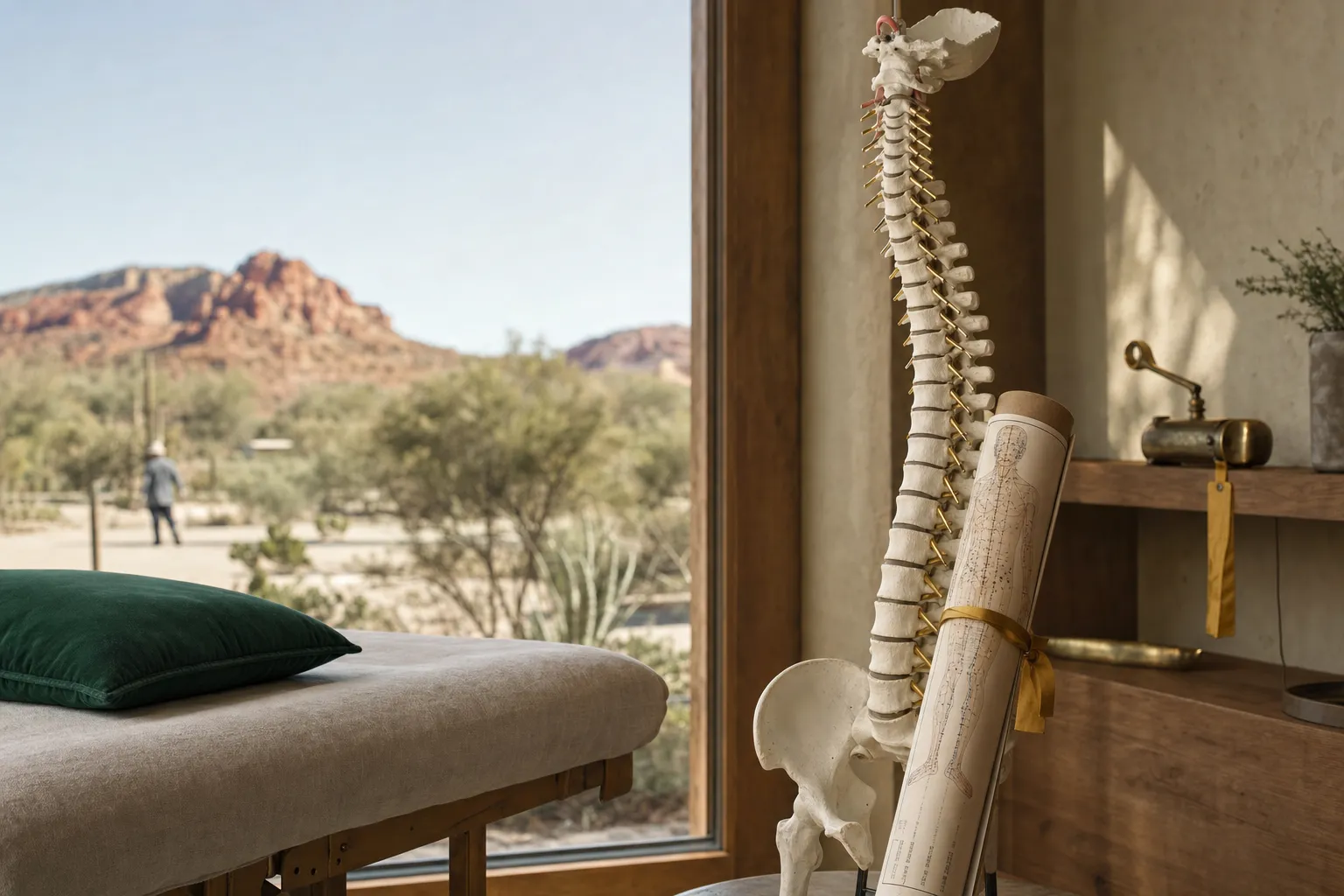
Meridian concepts are the Traditional Chinese Medicine idea that energy, often called qi, moves along defined pathways and that stimulating specific acupoints on those pathways can affect pain, function and wellness. We use those concepts to guide acupuncture point selection, to complement chiropractic care, and to tailor treatments for people in Cooley Station and nearby Queen Creek.
What meridian concepts are
Meridian concepts come from a body of practice within Traditional Chinese Medicine. A meridian is described as a channel or pathway that connects groups of acupoints with organs, movement patterns and symptom clusters. Modern practitioners combine that framework with physical exam findings, movement testing and the patient history to choose points that aim to reduce pain, improve mobility and support recovery.
For a concise background on the historical and academic description of meridians, the Wikipedia entry on meridian theory provides an accessible overview and references for further reading.
Why meridian concepts matter for Cooley Station patients
Locally, patients in Cooley Station, Queen Creek and San Tan Valley come to us with a mix of work related aches, sports injuries and chronic neck or back pain. Meridian concepts give us a structured way to connect symptoms you describe, such as shoulder pain or recurring headaches, with point choices that can be combined with spinal adjustments, soft tissue work and modalities like shockwave therapy.
We do not rely on meridian theory alone. We integrate it with the orthopedic exam, range of motion testing and your treatment goals so the care plan is grounded in both tradition and clinical findings.
Key concepts to understand
- Qi and pathways. Qi is the term used in Traditional Chinese Medicine for the functional energy concept. Meridians are the pathways connecting acupoints.
- Acupoints and local effects. Points have local mechanical and neurological effects, for example on muscle tone or sensory nerves.
- Distal and local point selection. We often combine points near the symptom with distal points along the same meridian to influence broader patterns.
- Integration with manual care. Acupuncture is most effective when coordinated with movement, soft tissue work and spinal adjustments where appropriate.
- Individualized plans. Two patients with the same complaint may receive different point prescriptions based on exam findings and overall health.
How we use meridian concepts in treatment
We begin with a focused intake and hands on exam. That lets us identify tender points, movement limitations and patterns that match meridian pathways. We then select acupoints that address both the local tissues and the related meridian pattern. Needling technique, needle depth and session length vary by patient and condition.
Pro tip: If you are coming for acupuncture after a chiropractic adjustment or massage, wear comfortable, loose clothing so we can reach the shoulder, hip or lower leg points without compromising modesty or comfort.
Common questions patients ask
Does acupuncture hurt
Most people feel little to no pain when a sterile, single use needle is inserted. You may notice a brief pinch or a dull ache at some points. We pair the needling with relaxation, breath guidance and manual techniques to reduce discomfort.
What conditions respond well to point selection guided by meridian concepts
Acupuncture can help with neck and back pain, headaches, shoulder pain and some musculoskeletal complaints. When appropriate we coordinate care with our chiropractic treatments and pain relief therapy. For more on how we approach neck issues, see our page on neck pain treatment.
How many sessions will I need
Response varies. Acute injuries often improve in a few sessions, while chronic patterns may need a longer plan. We set clear short term goals and reassess after a few treatments to decide whether to continue, modify or refer.
Checklist before your first acupuncture visit
Prepare by doing these things
- Wear loose clothing that allows access to the area being treated.
- Bring a summary of your recent medical or imaging results if you have them.
- Note any medications, supplements or blood thinners and tell the clinician during intake.
- Avoid heavy meals and alcohol right before a session.
Safety, scope and when to involve other care
We use single use sterile needles and follow standard infection control practices. Acupuncture is a low risk therapy, but there are situations where needling is not appropriate or where collaboration with other providers is required. Examples include uncontrolled bleeding disorders, certain skin infections and some pregnancy related conditions. We screen every patient to identify those risks and adjust the plan accordingly.
When a patient has a structural problem such as a significant disc herniation, recent fracture or red flag neurological signs, we coordinate care with medical colleagues and use conservative measures like joint adjustments, targeted soft tissue work and referral as needed.
Related services that often work with meridian based care
We combine acupuncture with several in clinic services to address pain and function. If you are managing chronic or acute pain, these are commonly part of a coordinated plan:
- Chiropractic adjustments, to restore joint mechanics and reduce nerve irritation.
- Pain relief therapy, for soft tissue and modality based care that complements needling.
- Shockwave therapy, when indicated for chronic tendinopathies or focal soft tissue conditions.
Related locations and how Cooley Station fits into our service area
We serve Cooley Station residents alongside nearby communities such as Queen Creek and San Tan Valley. If you want details about where we see patients and clinic access, check our Cooley Station location page which lists directions and practical arrival notes.
Helpful resources and evidence
For patients who want to read the research and official guidance, we recommend the National Center for Complementary and Integrative Health overview on acupuncture for a balanced review of the evidence. For historical context and terminology, see the Wikipedia entry on meridian theory. We use peer reviewed studies, clinical experience and patient feedback to shape how we apply meridian concepts in our practice.
Frequently asked questions
How do meridian concepts differ from anatomical pathways?
Meridian concepts are a functional framework from Traditional Chinese Medicine. They do not map exactly to nerves or blood vessels. Clinically we combine meridian based point selection with anatomical and neurologic examination so treatment is informed by both traditions.
Can acupuncture replace chiropractic adjustments?
Not usually. Acupuncture and adjustments address different aspects of pain and function. We often use them together. Adjustments target joint mechanics and neural function, while acupuncture addresses pain modulation and soft tissue tone.
Are there side effects I should expect?
Most side effects are mild and temporary, such as local soreness, minor bruising or lightheadedness. Serious complications are rare with sterile, professionally administered care. We screen for risk factors at intake.
Who performs acupuncture at The $35 Chiropractor?
Our clinicians are trained to integrate acupuncture with manual care. If you have questions about credentials or scope, ask at intake and we will explain who will provide your care and their training.
Key takeaway
Meridian concepts give us a useful framework for selecting acupuncture points, but we always integrate that framework with a hands on exam, movement testing and other therapies. For Cooley Station patients, acupuncture is one tool we use alongside chiropractic and pain relief therapy to reduce pain and improve function.
Learn more and check our local listing
To read patient reviews, see directions and confirm hours, check our Google Business Profile. For more information about how we approach care, visit our Cooley Station location page and explore our topics on patient education.