
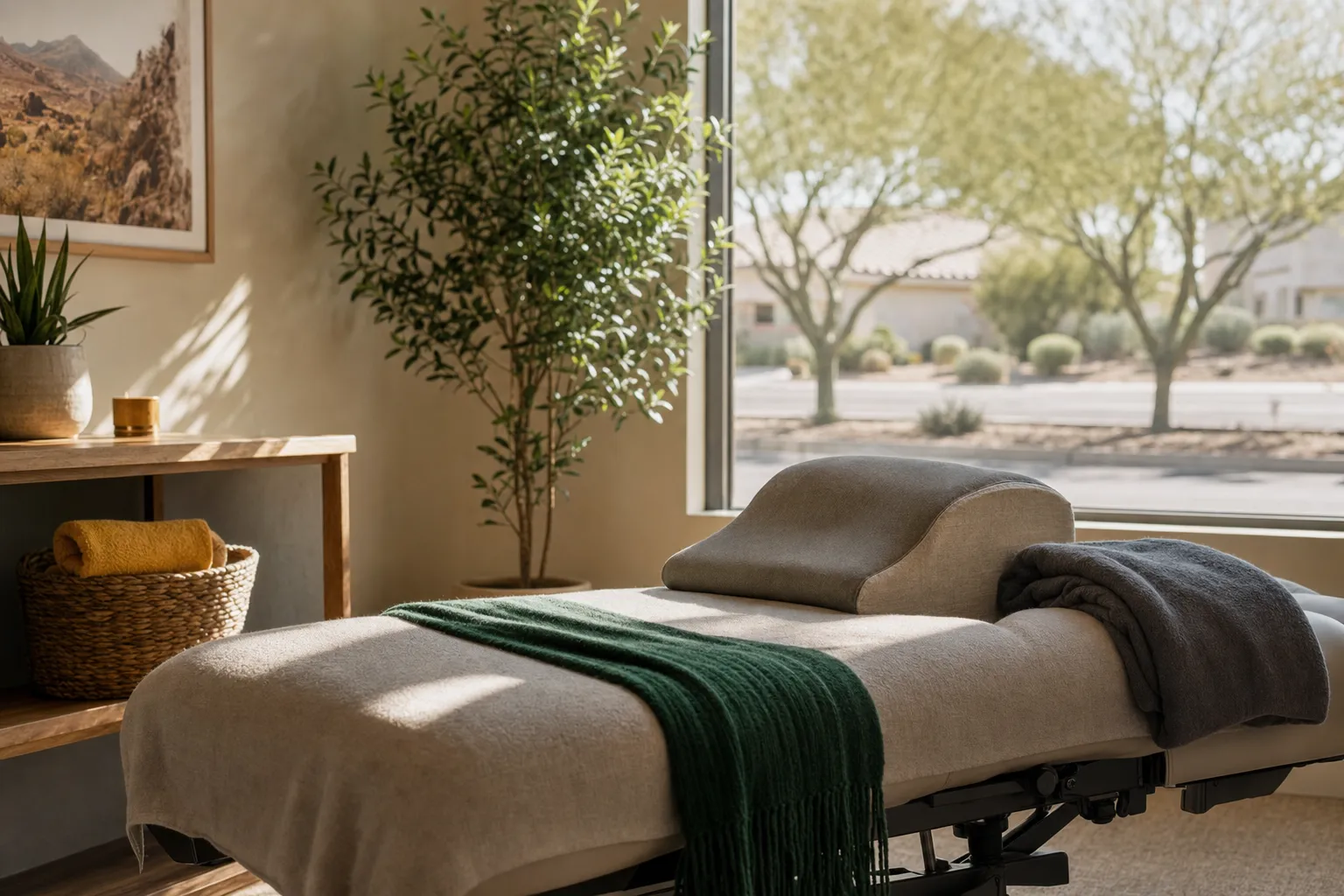
We recommend checking a massage therapist s credentials, the session s goals and techniques, hygiene and safety practices, and how the treatment will support your sleep and overall recovery. Below we explain what each item means, the trade offs to consider for different goals, and how to tell when a therapist or clinic is a good fit for someone living or training in the Mesa area.
What this topic covers
This guide explains what to review before choosing massage help aimed at improving sleep and speeding recovery. We cover the kinds of massage commonly used for sleep and recovery, how massage interacts with other treatments like chiropractic care and shockwave therapy, safety considerations and red flags, and practical criteria to compare therapists and clinics in Mesa and nearby communities.
We write from our clinical perspective at The $35 Chiropractor, and we include practical signs of quality so you can make an informed choice whether you are a weekend athlete, a busy professional, a parent, or managing chronic pain.
Why this matters locally
In Mesa and the surrounding communities, people juggle long commutes, early shifts and outdoor exercise in hot weather. Poor sleep or incomplete recovery increases the chance of flare ups in back pain, neck pain or sports injuries. Massage is commonly used to reduce muscle tension, lower stress, and improve circulation, all of which help sleep quality and recovery when combined with the right plan.
Local factors to consider include the therapist s experience with athletic recovery, familiarity with common regional activities like running on the trail system, and how massage fits with other services available near you, such as chiropractic care or shockwave therapy. At The $35 Chiropractor we often coordinate massage with hands on treatments and targeted therapies to improve sleep and mobility.
Key concepts to review before you choose
- Therapist credentials and training. Check license where applicable and ask about special training in sports massage, myofascial work or relaxation techniques.
- Treatment goal. Is the main goal sleep, short term pain relief, long term recovery or athletic performance? The session type should match the goal.
- Techniques and pressure. Swedish and relaxation massage focus on calming the nervous system. Deep tissue and sports massage target chronic knots and performance issues. Pressure and technique matter more than titles.
- Intake and screening. A good therapist asks about medical history, medications, recent injuries, and sleep patterns before starting.
- Safety and hygiene. Clean linens, private treatment rooms, informed consent and clear boundaries are non negotiable.
- Integration with other care. Massage is most effective when it supports a broader recovery plan, such as stretching, sleep habits and manual therapy from a chiropractor.
Common questions people ask
We answer the questions we hear most often from patients who are thinking about massage to improve sleep and recovery.
How does massage help sleep and recovery?
Massage can reduce muscle tension, lower sympathetic nervous system activity and promote relaxation. Those changes can make it easier to fall asleep and improve sleep quality, which supports tissue repair and recovery. For persistent sleep problems we consider sleep habits and other medical factors alongside massage.
Which types of massage are best for sleep?
Generally, gentle relaxation oriented techniques such as Swedish massage or slow myofascial work are best for sleep. Athletes may benefit more from a combination approach where performance focused work is followed by a calming session to promote recovery.
Are there safety concerns?
Yes. Massage is not appropriate for some conditions without medical clearance, including active infection, uncontrolled bleeding conditions, certain vascular problems and some recent surgeries. A therapist should screen for contraindications and modify or postpone treatment if needed.
Checklist you can use before you book
Pre session checklist
- Therapist license and relevant certifications verified
- Clear statement of session goals and expected outcomes
- Intake that asks about medications, recent injuries and sleep issues
- Plain explanation of techniques and pressure levels
- Private space with clean linens and visible hygiene practices
- Plan for how massage will fit with other care such as chiropractic adjustments or targeted therapies
Comparing common session types
| Type of massage | Best for | Pressure and focus | What to expect |
|---|---|---|---|
| Swedish relaxation | Sleep support, stress reduction | Light to moderate, long flowing strokes | Promotes relaxation and parasympathetic response |
| Deep tissue or sports | Chronic muscle knots, athletic recovery | Firm pressure, targeted work | May cause transient soreness, followed by improved mobility |
| Myofascial release | Restricted range of motion, persistent tightness | Gentle sustained pressure on fascial restrictions | Slow pace, often combined with movement or stretches |
How to evaluate a therapist or clinic
When you compare therapists, focus on the match between what they offer and your goals. Ask whether they routinely work with clients who want better sleep or faster recovery after workouts. Good signs include a structured intake, willingness to modify pressure, and clear communication about how massage will be integrated into a broader plan.
We coordinate massage with our other services so the work is complementary. If you want to know how massage might work with chiropractic care or targeted therapies, look for a clinic that describes an integrated approach and communicates between providers.
Pro tip: If your main goal is sleep improvement, prioritize therapists who emphasize relaxation techniques and discuss sleep habits rather than those who only promise deep tissue work.
Related services that matter
Massage is one tool among several ways to support sleep and recovery. Consider how it pairs with these services:
- Chiropractic care, which can address joint alignment and nervous system function and is often coordinated with massage
- Back pain treatment, for clients whose sleep is disrupted by lumbar pain
- Neck pain treatment, for sleep issues linked to cervical stiffness or headache
- Shockwave therapy and other targeted therapies for stubborn soft tissue problems, used alongside massage when appropriate
Related locations we serve
People who live or work in Queen Creek, San Tan Valley and Mesa often choose our clinic when they want an affordable, practical approach that combines massage with hands on care. For local details about our main office see our Queen Creek location page at Queen Creek Arizona location.
We also see patients from surrounding neighborhoods who prefer coordinated care that addresses sleep, recovery and pain together.
Helpful resources and background reading
For background on massage as a practice, see the Wikipedia entry on massage, which gives a broad overview of techniques and history from an encyclopedic perspective from Wikipedia. For industry standards and information about massage education and professional practice, the American Massage Therapy Association provides useful guidance on training and scope of practice at American Massage Therapy Association. For the connection between sleep and health, the Centers for Disease Control and Prevention maintains an evidence based overview of sleep and its effects on daily function at CDC Sleep Health.
We cite these sources for general context. A therapist or clinic should be able to explain how they apply best practices from these organizations to your individual needs.
Red flags and when to pause
- Therapists who avoid taking a health history or downplay medical conditions
- Pressure or techniques that do not match your stated goals, for example firm deep tissue when you asked for relaxation for sleep
- Promises of dramatic cures for chronic conditions or sleep disorders
- Poor hygiene, lack of privacy or unclear consent for touch
Watch out: If you have a history of blood clots, active infection, uncontrolled high blood pressure, or recent significant surgery, get medical clearance before a massage session and make sure the therapist documents the clearance.
Practical next steps for Mesa area residents
Start with a short consultation or a light relaxation session designed to assess how you respond. Communicate your sleep and recovery goals clearly. Track changes in sleep onset, sleep quality and daytime energy over two to four sessions to see whether the approach is helping. If pain or mobility issues are significant drivers of poor sleep, consider combined care that includes chiropractic adjustment and targeted therapies.
At The $35 Chiropractor we include clear intake and a plan that shows how massage fits with other treatments. New patients can see our approach to integrative recovery beginning with an initial assessment and treatment.
Key takeaway
To choose massage that helps sleep and recovery, verify the therapist s credentials, confirm the session s goals and techniques, ensure proper screening and hygiene, and prefer clinics that coordinate massage with other recovery services. Use a trial session and a short tracking period to judge results.
Frequently asked questions
How many massage sessions does it usually take to see sleep improvements?
Many people notice relaxation and easier sleep after the first session, but consistent improvements in sleep quality are more likely after two to six sessions depending on the cause. Track sleep over several weeks and combine massage with sleep habit changes for the best results.
Can massage make pain worse before it gets better?
Some techniques such as deep tissue work can cause transient soreness for 24 to 48 hours. That is different from worsening pain that persists or increases. A responsible therapist explains the expected response and modifies treatment if soreness is excessive.
Should I tell the therapist about medications and medical conditions?
Yes. Disclosing medications, recent surgeries, pregnancy, blood disorders and significant health issues is essential. Therapists use this information to adapt pressure and techniques and to decide if referral or medical clearance is needed.
Is massage safe during pregnancy?
Many therapists offer prenatal massage tailored to pregnancy, but you should work with someone trained in prenatal techniques and inform them of your stage of pregnancy. Medical conditions specific to your pregnancy may require clearance from your provider.
Where to learn more and check our local presence
Read patient feedback and get directions by viewing our Google Business Profile. For details about how massage fits with our overall approach to recovery, see our Sleep And Recovery topic page at Sleep And Recovery. To review our massage service details see our Massage page at Massage. For information about visiting our main office, see our Queen Creek location page at Queen Creek Arizona location.
We are The $35 Chiropractor, focused on affordable, practical care that combines hands on treatments and supportive therapies to help you sleep and recover better.