
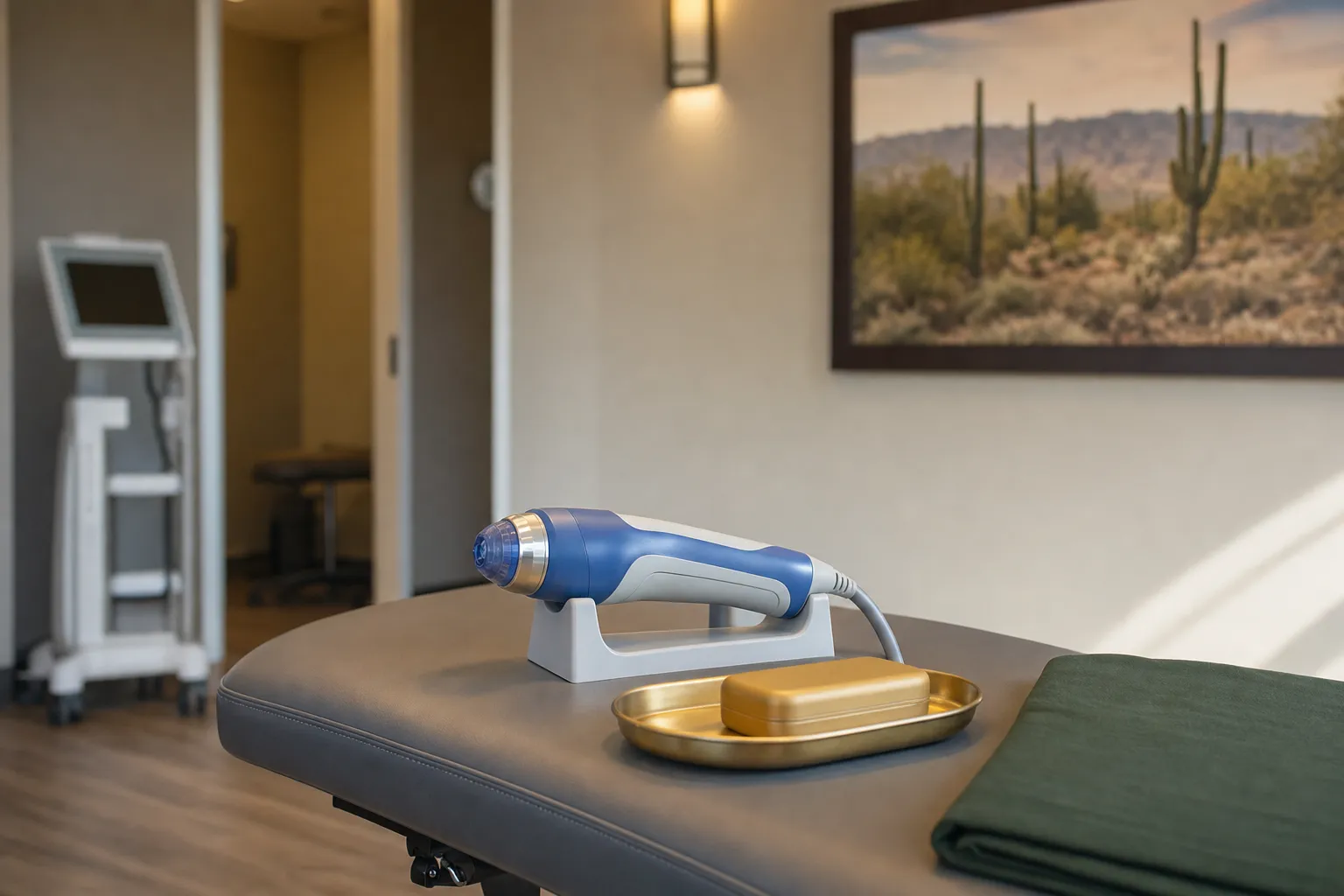
Yes. Shockwave therapy is generally safe for most Morrison Ranch residents when a licensed clinician performs a proper screening, follows device manufacturer guidance and monitors the treatment. We use shockwave therapy alongside chiropractic care to treat tendon and soft tissue problems, and we screen every patient to reduce risk and improve outcomes.
How shockwave therapy works and why safety matters
Shockwave therapy delivers focused mechanical pulses to a targeted area to stimulate tissue repair, reduce pain and break up minor calcifications. It is a noninvasive option commonly used for conditions like plantar fasciitis, Achilles tendinopathy and certain shoulder tendinopathies.
Safety matters because the treatment concentrates energy in a small area. Proper probe placement, correct energy settings and appropriate patient selection are the things that make the difference between therapeutic benefit and avoidable side effects.
Who is a good candidate and who should not have shockwave therapy
Good candidates typically have persistent soft tissue pain that has not responded to conservative care, such as targeted exercises, manual therapy and time. We consider the person as a whole, including medical history and current medications.
Watch out: Shockwave therapy is not appropriate for everyone. People who are pregnant, have an active infection at the treatment site, have a coagulation disorder, take blood thinners without medical clearance, or have an implanted electronic device such as a pacemaker usually should not receive shockwave therapy. We also avoid treatment over open growth plates in children and over known malignancies.
These contraindications are noted by international clinical guidance on extracorporeal shockwave therapy, and they are part of our intake screening process to keep patients safe. For more on clinical guidance, see the International Society for Medical Shockwave Treatment clinical recommendations.
What we do at our Queen Creek clinic before a treatment
We follow a three step safety approach before we deliver any shockwave session.
- Medical review. We review your health history, current medications and any implanted devices to identify contraindications or special precautions.
- Physical assessment. We examine the area to verify the source of symptoms, check for skin issues or infection and confirm that shockwave is a reasonable option compared with alternatives like manual therapy or acupuncture.
- Treatment plan and settings. We choose energy levels and the number of pulses based on the condition, your pain tolerance and published clinical protocols.
We document the plan so you know what to expect and so that any follow up care aligns with the initial evaluation.
What to expect during and after a session
During treatment you will feel rapid pulses against the skin. Sessions usually last 5 to 15 minutes for a single area. Most people tolerate the sensation, and we adjust intensity to your comfort while keeping therapeutic levels.
After treatment you may have temporary redness, mild swelling or increased soreness for 24 to 72 hours. These responses are typically short lived and part of the tissue repair process. Rarely, bruising can occur. If you have persistent or worsening symptoms we advise a clinical reassessment.
How we measure safety and results
We track pain scores, function and any adverse reactions at each visit. Progress is compared to expected timelines for the condition being treated, for example tendon problems often show improvement over several weeks with a combination of shockwave therapy and targeted rehabilitation.
We also follow established professional and device manufacturer guidelines for energy settings and maximum number of sessions. For broader workforce and practice context, see the Bureau of Labor Statistics page on chiropractors.
Questions to ask before you book a session
Pre treatment checklist
- Has the clinician reviewed your full medical history and current medications?
- Will the provider use manufacturer recommended settings for your condition?
- What are the expected short term reactions and how will they be managed?
- How many sessions are typically recommended for this condition?
- Will treatment be combined with manual therapy, exercises or acupuncture when appropriate?
Pro tip: Ask whether the practitioner will take photos or notes of the treatment site location and device settings so future sessions are consistent.
Safety tradeoffs and realistic expectations
Shockwave therapy is one tool among many. It is stronger than simple modalities like ice or topical medication, but it does not replace careful diagnosis or rehabilitation. For many tendon problems it can accelerate recovery, but it is not a single visit cure. Expect a course of care and a plan to address movement, strength and loading of the injured tissue.
We will recommend alternatives like manual therapy, acupuncture or targeted exercises when shockwave is not the best option or when combined care gives a better chance of lasting improvement. See our pages on Shockwave Therapy and Back Pain Treatment for how we integrate services.
Local considerations for Morrison Ranch residents
We serve Morrison Ranch residents from our Queen Creek clinic and we understand local activity patterns, such as walking routes and weekend sports, that influence injury patterns. If you live in Morrison Ranch we will tailor activity advice and rehabilitation to what you actually do day to day, not to a generic plan.
Before any treatment we invite you to read more about conditions commonly treated with shockwave on our Shockwave Conditions topic page and to confirm logistics on our Queen Creek location page.
Key takeaway
Shockwave therapy is generally safe when a licensed clinician screens for contraindications, follows device guidance and integrates the treatment into a broader rehabilitation plan. We evaluate every patient in person, select appropriate settings, and monitor response to keep the treatment as safe and effective as possible.
Frequently asked questions
Will shockwave therapy hurt during the session?
Some patients feel a tapping or pressure sensation. We adjust intensity to keep treatment therapeutic and tolerable, and we stop if the sensation is too uncomfortable.
How many sessions will I need for a chronic tendon problem?
Typical courses range from three to six sessions spaced one to two weeks apart, combined with targeted exercises. We set expectations during the initial evaluation based on the specific diagnosis.
Are there long term risks from shockwave therapy?
Long term risks are uncommon when treatment is performed correctly. Most reactions are short term and include temporary soreness or bruising. Serious complications are rare with proper screening and technique.
Can I have shockwave therapy if I am taking blood thinners?
Not without medical clearance. Blood thinning medications increase the risk of bruising and bleeding. We review medications during intake and coordinate with your medical provider when necessary.
Learn more and check our local listing
Read patient reviews and get directions on our Google Business Profile, and learn more about shockwave conditions and services on our site.