
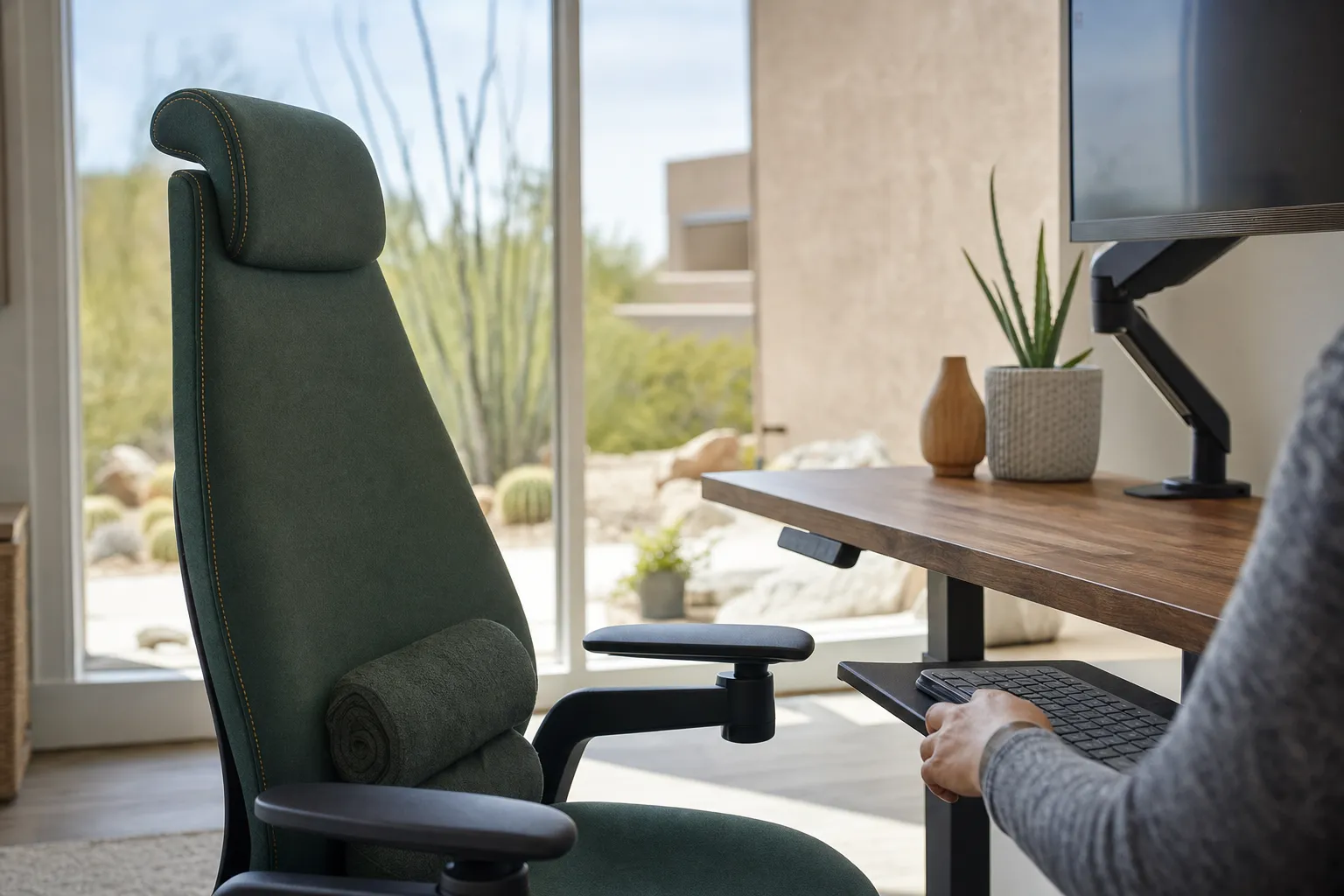
Why workplace ergonomics matter for back and neck pain
Yes. We find that ergonomics at work and back pain treatment are closely connected. Improving how you sit, stand, lift and move at work often reduces strain, helps treatment hold between visits, and speeds recovery.
When people come to us with back or neck pain, the problems we treat are usually a mix of tissue irritation and repeated stress from daily habits. Fixing the clinical problem without addressing the daily cause makes recurrence more likely.
Common workplace risk factors we see
These are the workplace patterns that most often show up when we evaluate people with back or neck pain.
- Prolonged sitting in a slouched position, especially with low back unsupported
- Monitors that are too low or too far, causing forward head posture
- Reaching or twisting while lifting, filing or carrying
- Awkward keyboard and mouse placement that creates shoulder and neck strain
- Repetitive tasks without brief movement breaks
How we include ergonomics in a back pain treatment plan
We combine hands on care with practical changes at work. Our goal is to treat pain now and reduce the chance it returns by addressing the work habits that contribute to strain.
What we examine during an ergonomics informed visit
- Intake and history. We ask where pain happens, what tasks aggravate it and how long symptoms have lasted.
- Movement and posture assessment. We watch sitting, standing, bending and reaching to find loaded patterns.
- Workstation review. We look at chair height, monitor position, keyboard reach and lifting technique so we can recommend targeted changes.
- Integrated treatment plan. We combine adjustment, soft tissue work and home mobility guidance with specific workstation changes to support recovery.
Simple workstation changes that help right away
These are practical, low cost adjustments that reduce strain and support any clinical care you get for back or neck pain.
Workplace ergonomics checklist
- Chair with lumbar support, seat height that allows feet flat on the floor
- Top of monitor at eye level or slightly below, about an arm length away
- Keyboard and mouse close enough to keep elbows near the body
- Phone use with headset to avoid cradling
- Stand or move for a few minutes every 30 to 60 minutes
Pro tip: Small changes add up. Adding two 2 to 3 minute movement breaks per hour often reduces stiffness by the end of the day.
When ergonomics alone are not enough
Ergonomic fixes help prevent and reduce strain, but some problems need hands on care. Seek clinical assessment if your pain does not improve after a week of sensible changes or if you have any of these red flags.
Watch out: Severe pain, numbness, weakness in the legs or arms, sudden loss of bladder or bowel control, or rapidly worsening symptoms need prompt professional attention.
When symptoms are persistent or severe, we combine treatment options like manual adjustment, soft tissue work, therapeutic modalities and a tailored home plan. That combination addresses pain in the clinic and reduces the workplace causes between visits.
How our approach connects ergonomics, chiropractic and related care
We treat the symptoms you bring to us and help you change the daily stresses that created them. That means our plan often references other services so care is coordinated and practical.
- Back Pain Treatment for lumbar strain and related conditions, with tailored rehabilitation and movement coaching
- Neck Pain Treatment for forward head posture and upper back strain
- Chiropractor services that include joint mobilization and postural correction
- Complementary therapies such as massage and acupuncture when appropriate
Learn more about our approach to workplace ergonomics on our topic page about Ergonomics At Work, and see details about our Back Pain Treatment service. If you are local, our Queen Creek practice page explains where we see patients in the area and how we serve nearby neighborhoods such as Rolling Hills Ranch, Higley and Val Vista Lakes, Arizona: Queen Creek, Arizona location.
Common misconceptions about ergonomics and chiropractic care
We hear a few repeated misunderstandings. Clearing them up helps people make better choices.
- Misconception: Ergonomics fixes eliminate the need for treatment. Reality: Ergonomics reduce strain but established tissue irritation often needs clinical care to settle.
- Misconception: Only office workers need ergonomic changes. Reality: Ergonomic principles apply to warehouse work, retail, driving jobs and any role with repeated movement or sustained postures.
- Misconception: One perfect chair solves everything. Reality: A good setup helps, but movement habits and conditioning matter just as much.
Key takeaway
Workplace ergonomics and back pain treatment are partners. We address pain in the clinic and give practical, workplace focused recommendations so treatment lasts longer and recurrence is less likely.
Frequently asked questions
Can ergonomic changes replace chiropractic care for back pain?
Minor, early stage discomfort may improve with ergonomic adjustments alone. For ongoing or significant pain, combining ergonomic fixes with clinical care like our back pain treatment gives faster and more reliable improvement.
What is a basic ergonomic setup for someone with neck pain?
Start with monitor height at or just below eye level, keyboard and mouse close to the body, and a chair that supports the lower back. We also recommend brief movement breaks and simple neck mobility exercises as part of care.
Do you perform workplace visits or virtual workstation assessments?
We routinely review workstations during clinical visits and provide clear, actionable adjustments. If you need a focused review, mention workstation concerns during your visit so we can include observations and recommendations.
How quickly should I expect improvement after changing my workstation?
People often notice reduced stiffness and less pain within days, but meaningful improvement depends on how long the issue has been present and whether clinical care is needed. If pain persists after a week of sensible changes, a clinical assessment is appropriate.
Are there official guidelines for workplace ergonomics I can read?
Yes. Federal workplace safety guidance offers ergonomic recommendations and resources. For general background on chiropractic as a field, see the chiropractic entry on Wikipedia, and for workplace ergonomics information consult the Occupational Safety and Health Administration ergonomics resources.
Learn more and check our local information
Check our Google Business Profile to read reviews and get directions, and visit our pages on related topics and services for more details.