Shockwave conditions are often more complicated than people expect because pain can come from multiple tissues, chronic inflammation, and mechanical imbalance at the joint or spine. We evaluate these cases with a focused exam, diagnostic reasoning, and a combination of targeted shockwave therapy plus supportive chiropractic care, massage, and rehabilitation depending on what we find.
What we mean by shockwave conditions
When we say shockwave conditions we mean musculoskeletal problems that respond to or are treated with extracorporeal shockwave therapy. That includes chronic tendinopathy, plantar fasciitis, calcific deposits in soft tissue, and stubborn trigger points that have not improved with rest or basic treatments. In our clinic we use shockwave therapy alongside spinal adjustments, soft tissue techniques, and movement work to address pain and function.
Shockwave therapy is a medical device treatment used to stimulate healing in injured tissue. You can read a general overview of the technique on Wikipedia to understand the underlying concept and history.
Why these conditions are often more complicated than they first appear
There are several reasons a shockwave condition can be harder to fix than you think. We see these patterns every week in Fulton Homes at Morrison Ranch and across Queen Creek.
- Multiple pain generators. Tendons, fascia, bony interfaces, and nearby joints can all contribute to the same pain you feel.
- Chronic tissue change. Longstanding tendinopathy often involves microscopic degeneration and scar tissue that need a staged approach, not one treatment.
- Referral patterns. Spine or nerve irritation can refer pain to an area that looks like a local tendon problem.
- Biomechanics. Foot posture, hip weakness, workplace ergonomics, or gait problems can continually load a weak tendon and prevent recovery.
- Variable patient factors. Age, metabolic health, medications, and activity level change healing response and affect treatment choices.
How we evaluate shockwave cases in our clinic
We aim to find what is driving your pain, and what will realistically help it recover. The exam is a mix of history taking, hands on testing, and targeted imaging or device use when indicated.
- History and timeline. We ask when symptoms started, how they have changed, what makes them better or worse, and what treatments you have already tried.
- Regional exam. We assess the local tendon or tissue, nearby joints, and relevant spinal segments to find contributing sources of pain.
- Movement and loading tests. We observe how walking, squatting, overhead movement, or work tasks change symptoms to identify mechanical drivers.
- Diagnostic reasoning. We synthesize findings to distinguish true local tissue pathology from referred pain or nerve contribution.
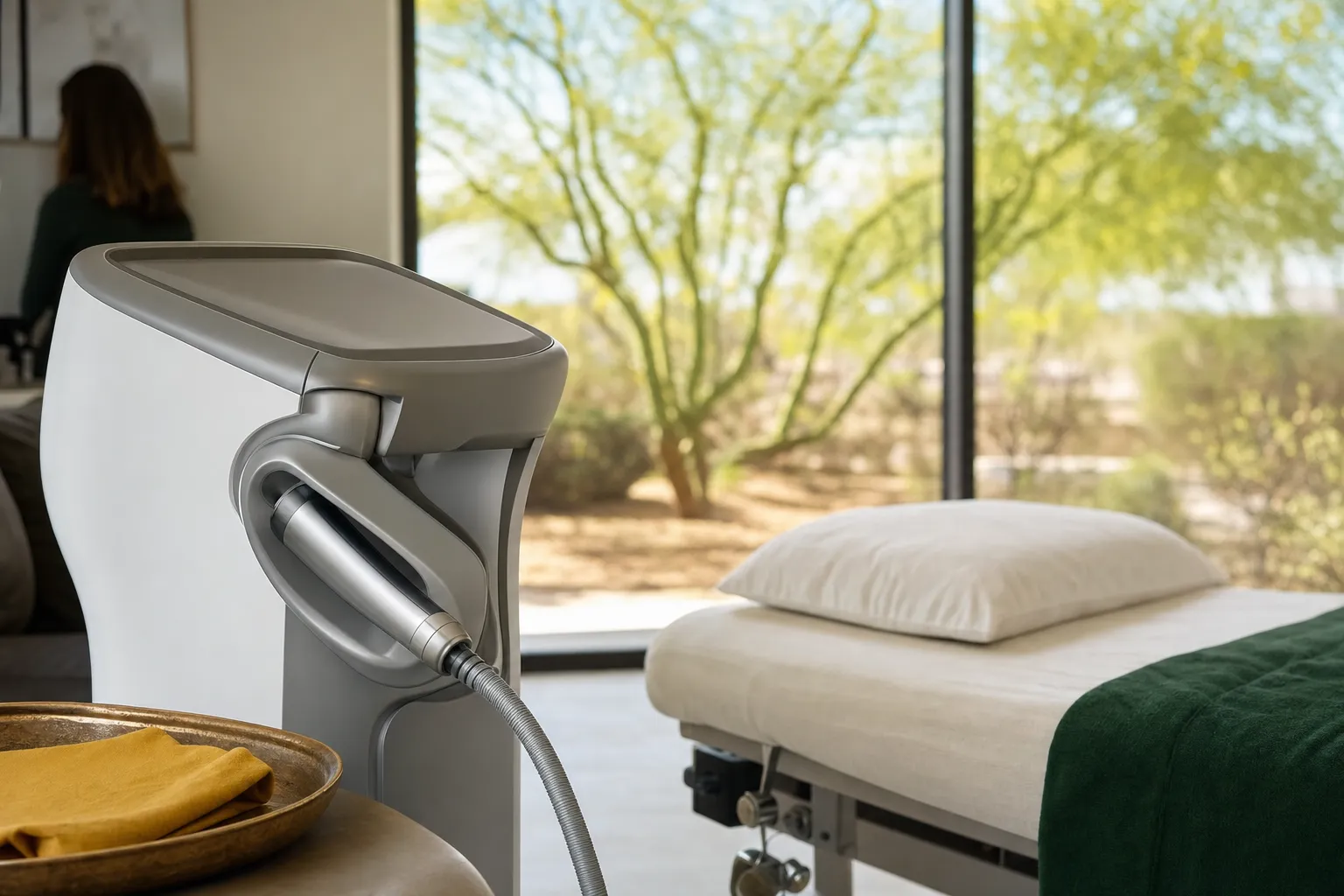
- Imaging and documentation. When appropriate we review imaging or recommend further imaging. Device manufacturers provide specifications and care guidance that help us match a machine and protocol to the tissue we are treating.
Treatment options and how we combine them
Shockwave therapy is a tool, not a standalone cure in most chronic cases. We typically combine it with other care tailored to the findings.
- Shockwave Therapy. Targeted pulses to stimulate remodeling in chronic tendons or calcific deposits. Protocols vary by condition and device.
- Chiropractic adjustments. When joint mechanics or spine related referral are present we apply spinal or extremity adjustments to restore movement and reduce abnormal loading. Learn about our chiropractic approach on our Chiropractor service page.
- Soft tissue work. Massage and myofascial techniques reduce tension that can overload a healing tendon.
- Rehabilitation and movement coaching. Progressive loading, strength work, and gait or ergonomic corrections address the root mechanical causes of the problem.
- Adjuncts. Ice, heat, bracing, or temporary activity modification can support recovery while tissues remodel.
For back or neck related shockwave presentations we coordinate care with our Back Pain Treatment and Neck Pain Treatment approaches to ensure the spinal contribution is not missed.
Pro tip: Good results often come from a protocol that sequences treatments. For example, shockwave sessions focused on the tendon followed by progressive loading exercises and periodic movement work often leads to better functional improvement than device use alone.
Typical course of care and what to expect
Recovery timelines vary. Acute cases can improve in a few weeks, while chronic cases may need several shockwave sessions spaced over weeks, plus a rehabilitation program. We review progress regularly and adjust the plan based on how you respond.
When we recommend shockwave therapy we explain the expected number of treatments, typical sensations during a session, and the functional milestones we use to measure success.
Decision points and tradeoffs
Choosing the right path means weighing pros and cons for your situation.
Pros
- Can accelerate healing in stubborn tendinopathy.
- Office based, non operative option with short sessions.
- Often works when conservative care has stalled.
Cons
- Requires a course of treatment and active rehabilitation to hold gains.
- Some people need ongoing management of biomechanical contributors.
- Not every case is suitable, for example when a structural surgical issue is present.
What we ask you to bring and prepare
Before your visit
- Wear comfortable clothing that allows access to the area of pain.
- Note a clear timeline of symptoms and prior treatments.
- Bring any relevant imaging or reports you have.
- Prepare a list of medications and known health issues that affect healing.
Watch out: Severe symptoms such as sudden loss of strength, numbness that spreads, or signs of infection around a painful area should prompt urgent medical evaluation. These are red flags that need immediate attention rather than routine clinic care.
Local factors we consider in Fulton Homes at Morrison Ranch and Queen Creek
Local lifestyle and activity patterns matter. In this area we commonly see tendon strain from walking and running in warm weather, and from home improvement and outdoor work. That can change our treatment emphasis, for example focusing on gradual return to higher heat activities and footwear adjustments. For more on related topics see our Shockwave Conditions topic page and our Queen Creek location page.
Key takeaway
Shockwave related pain often hides multiple causes. A targeted exam, the right device protocol, and coordinated care including chiropractic adjustment, soft tissue work, and progressive rehab give the best chance of durable improvement.
Common questions we hear
Below are the questions patients ask most. If you want a deeper overview of how we handle spine related contributors see our Back Pain Treatment and Neck Pain Treatment pages.
Frequently asked questions
How does shockwave therapy feel and is it painful?
Most patients feel brief pulses or discomfort during application as the device stimulates the tissue. We adjust intensity based on your tolerance and the clinical goal. Any discomfort usually settles within minutes and is monitored each session.
How many shockwave sessions will I need?
The number varies by condition. Many tendinopathy protocols use a series of three to six sessions spaced a week or more apart, combined with guided loading exercises. We tailor the plan to your response and adjust if progress stalls.
Can shockwave therapy replace other treatments?
Shockwave is an important tool, but in chronic or mechanically driven cases it rarely stands alone. We often combine it with adjustments, soft tissue care, and a rehab plan to address the underlying causes of pain.
Are there reasons not to use shockwave therapy?
Yes. Certain medical conditions, active infection, and some vascular or bleeding disorders make shockwave unsuitable. We screen your medical history and exclude contraindications before recommending it.
Will an adjustment alone fix a shockwave related tendon problem?
Not usually. If spinal or joint mechanics are contributing, adjustments help. But tendon remodeling typically needs targeted loading and sometimes device assisted stimulation. We look for both local and regional contributors before deciding on the treatment mix.
Learn more and check our local profile
Read patient feedback and get directions on our Queen Creek listing, and see how we approach Shockwave Conditions in our local practice. For details on the hands on services we combine with shockwave therapy see our Chiropractor service page and our Shockwave Conditions topic page.