
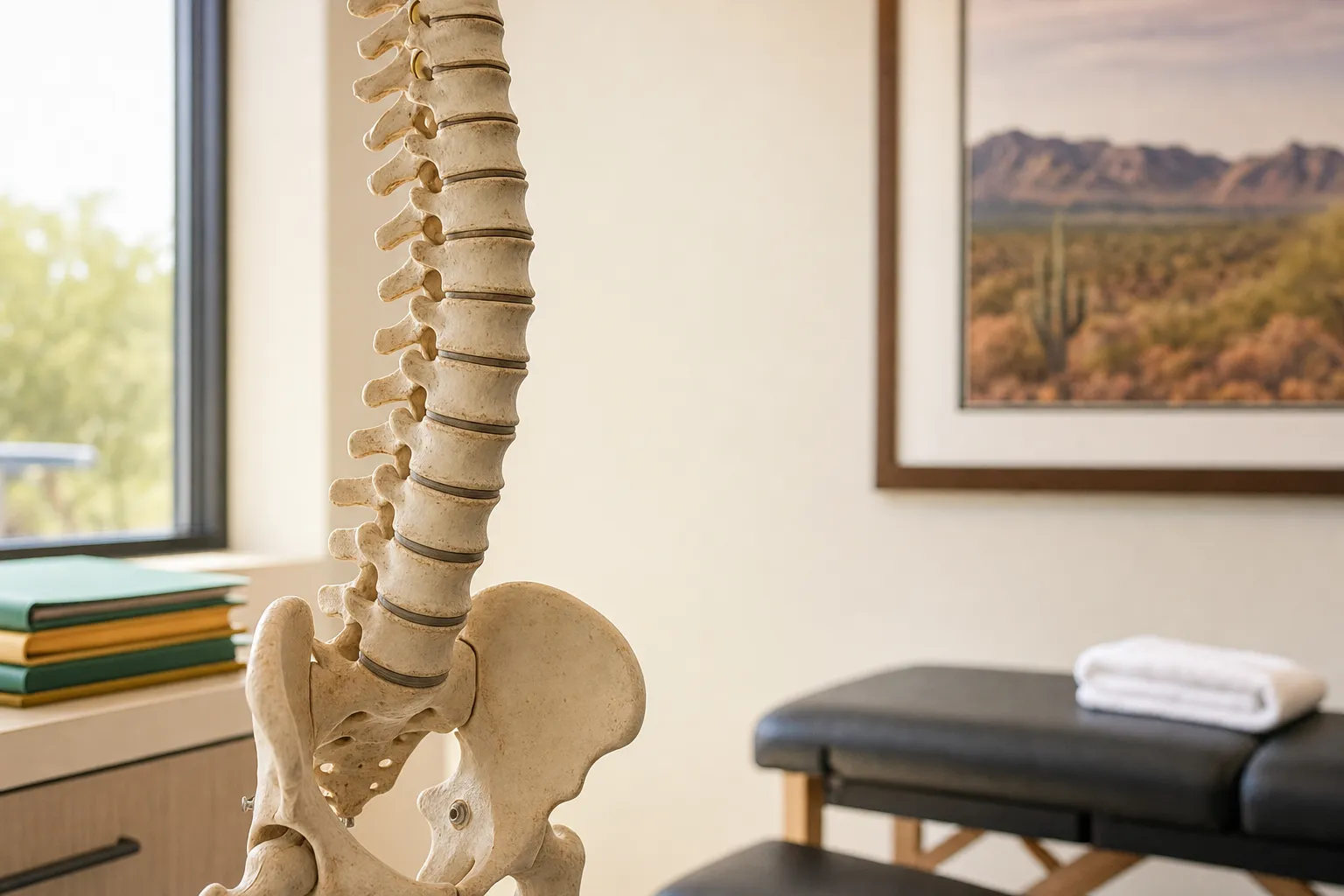
Spinal anatomy sets the rules for pain and recovery. The spine s shape, the condition of discs and joints, and how nerves leave the spinal column all affect which pain relief therapies will help most. We evaluate anatomy with history, hands on exam, and imaging when needed, then match treatment to the findings so you get safer, more predictable results.
What is spinal anatomy
Spinal anatomy describes the bones, discs, joints and nerves that run from the base of your skull to your pelvis. Each region has different functions. For example, the cervical spine is built for motion and head support, while the lumbar spine bears weight and absorbs walking forces. Those differences shape how pain appears and how we approach care.
Why spinal anatomy matters for pain relief in Germann Arizona
Local activities, travel patterns between Germann and Queen Creek, and the tasks people ask us about influence which parts of the spine are most often involved in pain. In practice, anatomy guides safety and choice of treatments such as adjustments, targeted massage, acupuncture, shockwave therapy, or referral for imaging and specialist care.
Key concepts to understand
- Vertebral segments. Cervical, thoracic, lumbar and sacral regions each behave differently and produce distinct symptoms.
- Intervertebral discs. Discs cushion segments and can bulge or degenerate, producing focal or radiating pain.
- Facet joints. These small joints guide motion and can be a source of local stiffness and pain.
- Spinal nerves. Nerves exit between vertebrae. Compression or irritation creates tingling, weakness or shooting pain.
- Curves and alignment. Normal curves help distribute load. Loss of curve or excessive curvature changes which tissues wear first.
How we evaluate spinal anatomy
- History. We ask where the pain started, what makes it better or worse, and how it affects daily life.
- Physical exam. Hands on testing shows where motion is limited, which movements reproduce symptoms, and whether nerves are involved.
- Imaging when indicated. X rays or MRI provide structural details we cannot see on exam alone. We order imaging only when it will change the plan.
- Treatment mapping. We choose hands on care, soft tissue work, shockwave, acupuncture, or referral based on the anatomic findings and your goals.
Pro tip: If you bring recent imaging or prior reports to your visit it speeds decisions and helps us match the treatment to your spine s current condition.
Cervical versus lumbar spine at a glance
| Region | What to expect |
|---|---|
| Cervical spine | Greater range of motion, common sources of neck pain and headache patterns, careful neural assessment needed for arm symptoms. |
| Lumbar spine | Weight bearing and load related pain, often linked to disc irritation or facet overload, can produce leg symptoms when nerves are involved. |
When anatomy changes the treatment choice
Some examples of how anatomy steers care:
- If nerve irritation produces progressive weakness we prioritize imaging and specialist referral.
- When facet joints are the pain source we emphasize targeted adjustments, joint mobilization and soft tissue work.
- With degenerative discs we combine unloading strategies, graded activity and therapies that help tissue tolerance rather than aggressive manipulation alone.
Related services and resources
Our approach to spinal anatomy is part of how we provide Pain Relief Therapy. For mechanical back problems we often coordinate with our Back Pain Treatment plans and the general Chiropractor services we offer.
For readers who want more background on structural spine anatomy, see the detailed educational overview by the University of Michigan Health. For context about the chiropractic profession in the United States, the Bureau of Labor Statistics provides occupational information and trends.
Related locations we serve
We serve Germann customers through our Queen Creek clinic and nearby communities. If you are in Germann, Arizona, our location page describes access and local details.
Learn more about our Germann area services on the Germann location page.
Helpful resources and when to seek more evaluation
We do not rely solely on anatomy for decisions. Progressive neurological loss, new bowel or bladder changes, or sudden severe pain after trauma require urgent evaluation beyond routine care. When plain exam findings suggest those issues we refer for imaging or specialist assessment.
Key takeaway
Spinal anatomy dictates how pain presents and which therapies are appropriate. We assess anatomy carefully and combine hands on care, modalities, and referrals to create a plan that matches your spine s needs.
Frequently asked questions
Can spinal alignment be changed with conservative therapy?
Conservative care such as targeted adjustments, soft tissue work, and exercise can improve alignment and function for many people, but results depend on the underlying anatomy and how long a change has been present.
Do I always need imaging to evaluate my spine?
No. We use history and exam first. Imaging is ordered when it will change the plan, for persistent problems, or when neurological signs suggest nerve compromise.
How does a herniated disc affect treatment choices?
A herniated disc that irritates a nerve may need activity modification, neural mobility work, and specific conservative treatments. If weakness or progressive symptoms occur we coordinate imaging and referral.
Will shockwave therapy or acupuncture help structural spine problems?
These therapies can reduce pain and speed recovery for certain soft tissue and chronic conditions. The choice depends on the anatomic source of pain and how you respond to initial treatments.
Find out more locally
Read our Germann location page to get practical details about access and reviews, and review related topics to learn how we treat common spine conditions.