
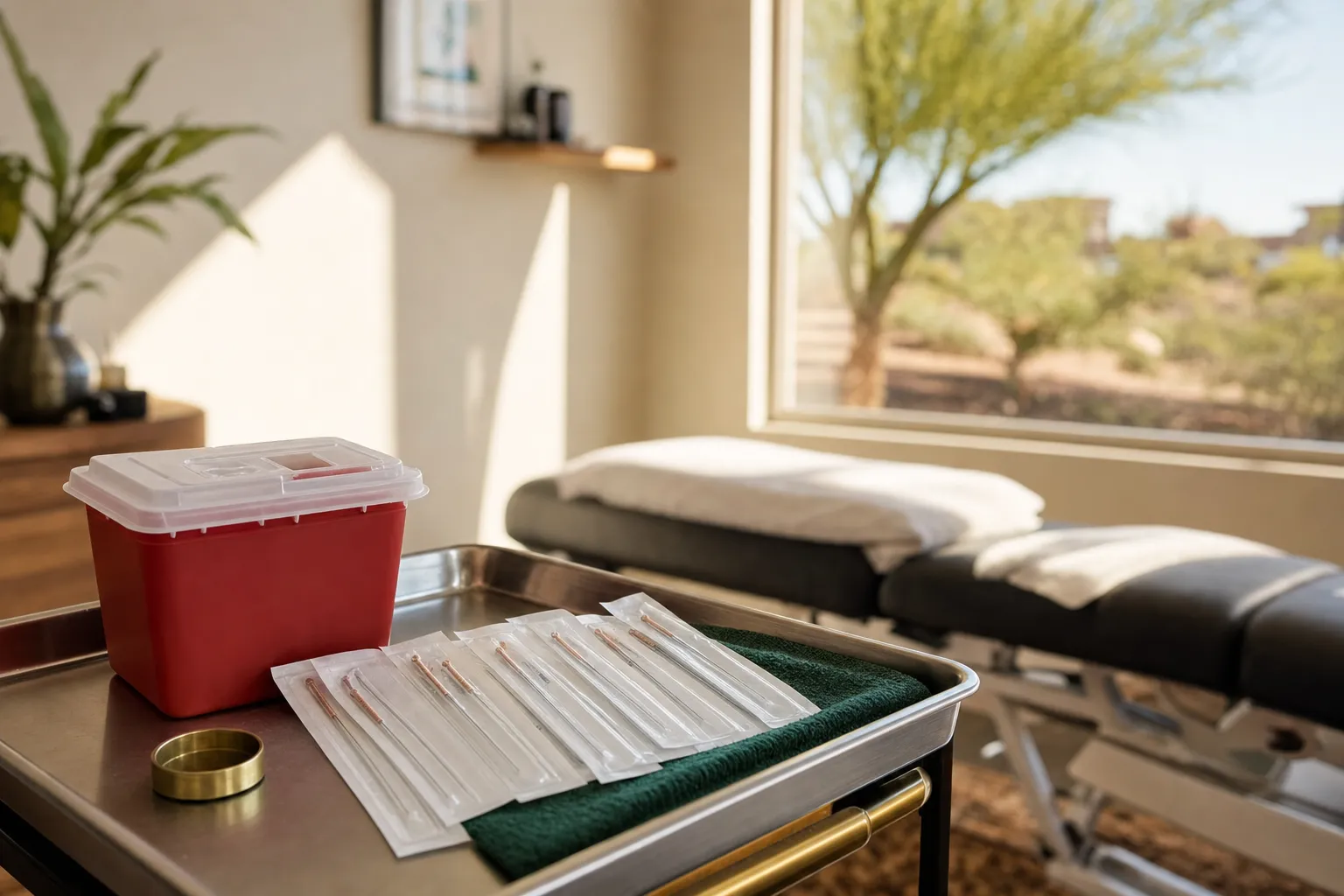
Needle safety means using sterile, single use needles, following manufacturer instructions, and handling, storing and disposing of them to prevent infections or needlestick injuries. At The $35 Chiropractor, serving Queen Creek and nearby neighborhoods including Rolling Hills Ranch, Arizona, we follow standard precautions and documented procedures so patients can expect safe, professional care when needles are part of a pain relief plan.
Why needle safety matters for pain relief therapy
Needles are a common part of several clinic treatments, including acupuncture and certain injections that support pain relief therapy. When needles are handled correctly, they help patients without adding risk. When they are not handled correctly, they can cause infections, skin reactions, or accidental injuries to staff or patients.
We treat needle safety as a patient safety issue and a quality marker for care. That means attention at every step, from choice of device to final disposal, and clear communication with you about why a needle is being used and what to expect.
How we make needle use safe in our clinic
Below are the practical steps we take. You can quote any one of these with a care coordinator or practitioner to confirm what we do before treatment.
- Device selection. We use only single use, sterile needles from reputable manufacturers, chosen for the procedure and patient size. Single use needles are the standard for reducing cross contamination.
- Storage and handling. Needles are kept in sealed packaging until needed, stored according to manufacturer recommendations, and handled with clean hands and gloves only when ready to use.
- Sterile preparation. Skin is cleaned with an appropriate antiseptic where indicated, and we avoid unnecessary skin puncture or repeat attempts.
- Trained clinicians. Clinicians administering needle procedures have specific training in technique, anatomy and safety protocols. That training reduces the number of attempts and lowers risk.
- Safe disposal. Used needles are placed immediately into puncture resistant containers that meet industry guidance, and those containers are handled and disposed of under regulated medical waste procedures.
- Documentation. We record the device type, lot number when visible, site, and any immediate reactions in the patient chart to support follow up and traceability.
What you should expect before, during and after a needle procedure
We want you to feel informed. Before any needle procedure you should expect us to:
- Explain why the needle is recommended and what it aims to accomplish.
- Review your relevant health history, including allergies, blood thinners or previous reactions to injections.
- Show or describe the device and explain that it is single use and sterile.
- Confirm where the procedure will take place and what aftercare looks like.
During the procedure we will use gloves, prepare the skin if needed, use a single attempt when possible, and stop if you report unusual pain or dizziness. Afterward we will give clear aftercare instructions and explain signs that should prompt a call or an evaluation.
Pro tip: If you want extra reassurance, ask your practitioner to show the needle package before it is opened and to explain the disposal procedure for used needles.
Common needle safety questions patients ask
People often worry about infection, pain, and how used needles are handled. We answer those directly and document the answers in the chart.
- What causes infection after a needle? Poor skin preparation, reused needles, or improper storage can increase infection risk.
- Does needle therapy hurt? Sensations vary by procedure and person. We use techniques to minimize discomfort and explain expected sensations ahead of time.
- What happens if a needlestick injury occurs? Our staff follow internal exposure protocols, which include immediate care, documentation and a plan for medical follow up, guided by public health recommendations.
Checklist you can use before a needle treatment
Needle safety checklist
- We reviewed your health history and medications.
- The clinician explained why a needle is needed and the expected benefits.
- The clinician confirmed the device is single use and showed or named the manufacturer.
- Skin was prepared if appropriate and gloves are in use.
- Used needles are placed in a puncture resistant container immediately.
How needle safety fits into a complete pain relief therapy plan
Needles are one tool among many. A strong plan balances short term relief with longer term strategies. For example, when needle procedures are appropriate we combine them with manual care, targeted exercises and posture work to reduce recurrence of symptoms.
At The $35 Chiropractor we integrate needle based options into broader pain relief therapy. For more on our overall approach to managing pain, see our Pain Relief Therapy page.
Patients who come for neck pain or back pain often benefit from multimodal plans that include manual adjustments, soft tissue work, and sometimes adjuncts that involve needles. If you are exploring options for back pain or neck pain, our pages on Back Pain Treatment and Neck Pain Treatment explain how different treatments fit together.
Watch out: Avoid a provider who refuses to discuss their needle protocol, will not review your health history, or uses reused equipment. Those are red flags that raise your risk of infection or injury.
Regulation and standards that guide safe needle use
Safe needle handling follows widely accepted guidance from public health and occupational safety organizations. For clinical teams this includes practices around sharps disposal and bloodborne pathogen precautions. You can read general safe injection guidance from the U.S. Centers for Disease Control and Prevention for an overview of recommended practices.
We follow manufacturer instructions for any device we use and adhere to occupational safety expectations for handling medical sharps.
What a local patient in Rolling Hills Ranch should know
Residents of Rolling Hills Ranch and nearby neighborhoods can expect the same standards we practice at our Queen Creek clinic. We document procedures, keep traceable supplies on hand, and follow local waste handling rules for sharps containers.
If you are comparing clinics in the area, ask whether the clinic documents device lot numbers for traceability, uses single use needles, and maintains secure storage for supplies. Those are practical checks, not technical ones, and they say a lot about a clinics quality control.
Key takeaway
Needle safety is about sterile, single use devices, trained clinicians, proper handling and secure disposal. Asking a few simple questions before treatment gives you a clear sense of how seriously a clinic treats safety.
Related topics and services
To learn more about our wider approach to managing tissue inflammation and recovery, see our Patient Education topic. For details about needle free treatment options and how they fit into a care plan, see our Pain Relief Therapy service page. If you are in Queen Creek and want local information about our practice and locations, see our Queen Creek, Arizona location page.
Frequently asked questions
Are needles reused in your clinic?
No. We use single use, sterile needles only. Needles are discarded into certified puncture resistant containers immediately after use.
What should I tell the clinician before a needle procedure?
Tell us about allergies, current medications especially blood thinners, previous reactions to injections, and any bleeding disorders. That information helps us plan technique and aftercare.
Are there alternatives if I do not want needle treatment?
Yes. Many patients use manual therapy, massage, shockwave therapy and exercise as alternatives or complements to needle procedures. We discuss non needle options during treatment planning.
How do you dispose of used needles?
Used needles go into puncture resistant sharps containers and are handled per regulated medical waste procedures so they are not accessible to the public or staff outside of proper channels.
Who should I contact if I have a reaction after a needle procedure?
If you have signs of infection, increasing redness, swelling, fever, or unusual pain after a procedure, seek medical attention. We also document the event and provide follow up care instructions as part of your charted record.
Learn more and check our local information
Read patient information and treatment details on our Pain Relief Therapy page, explore broader patient education topics, and review our local clinic information for Queen Creek, Arizona to see how we serve nearby neighborhoods including Rolling Hills Ranch.