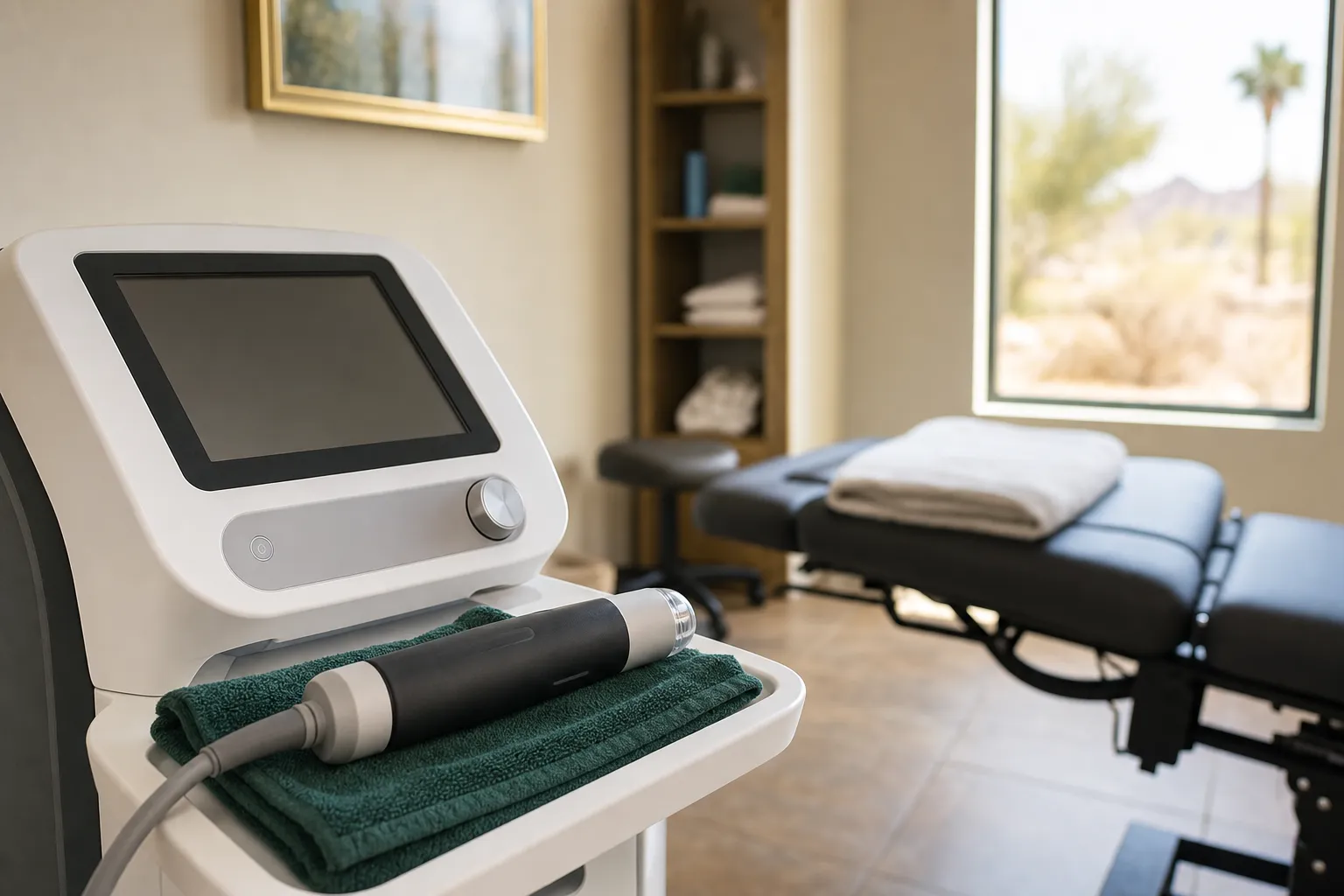
Shockwave therapy, sometimes called extracorporeal shockwave therapy or ESWT, uses focused acoustic pulses to stimulate a biological response in injured soft tissues, and we use it as one option for chronic tendon and heel pain and for some recalcitrant soft tissue problems when conservative care alone has not given enough relief.
What is shockwave science
Shockwave therapy delivers controlled pulses of mechanical energy into targeted tissue. The intent is to increase blood flow, stimulate cellular repair pathways and break up calcified tissue deposits in certain chronic conditions. In practice we combine those pulses with our hands on care, therapeutic massage and a progressive rehab plan rather than using shockwave as a stand alone fix.
There are two broad device types used in clinics, focused wave and radial wave, each with different penetration patterns and clinical uses. Device choice, energy settings and the number of sessions depend on the diagnosis, tissue depth and patient tolerance.
Why shockwave science matters for Rolling Hills Ranch and Queen Creek patients
Locally, many active adults, athletes and manual laborers bring us chronic tendon problems from running, construction work and repetitive activities. Conditions like chronic plantar fasciitis, Achilles tendinopathy and lateral elbow pain are common in our community, and some of these cases respond slowly to standard conservative care.
Shockwave therapy gives us an additional, noninvasive option when soft tissue problems persist. It is not for every patient or every condition, but for selected cases it can shorten the timeline to meaningful improvement when used with adjustments, targeted exercises and supportive therapies we offer at our Queen Creek clinic.
Key concepts to understand
- Not a quick fix. Shockwave is an adjunctive treatment. Most patients need a short course of sessions plus rehab and manual care to get reliable results.
- Indications matter. It is most appropriate for chronic tendinopathy, plantar fasciitis and some calcific shoulder conditions rather than for acute sprains or generalized back pain.
- Energy and device type matter. Focused devices penetrate deeper for tendon and bone interface work, radial devices treat broader, more superficial areas. We match device and settings to the condition.
- Safety profile. When applied by trained clinicians it is low risk, but temporary soreness, reddening and bruising can occur. We screen for contraindications before recommending it.
- Part of a plan. Combining shockwave with spinal adjustments, soft tissue work, acupuncture or massage and a progressive exercise plan gives the best chance of improvement.
How we evaluate whether shockwave is appropriate
Our approach begins with a thorough review of symptoms, past treatments and imaging when available. We look for signs that a condition is chronic and localized to tendinous or plantar tissues and that the patient has already completed a reasonable trial of conservative care such as rest, stretching, strengthening and manual therapy.
Key clinical steps we follow include a focused orthopedic exam, assessment of movement and load tolerance, and discussion of the patient goals and schedule. If shockwave looks reasonable, we explain the procedure, likely course and expected sensations during treatment.
What to expect during a typical treatment plan
- Initial review and consent. We confirm the diagnosis, review any imaging and check contraindications such as active infection, bleeding disorders or pregnancy.
- Baseline function and pain rating. We document range of motion, functional limitations and pain so we can track change.
- Treatment sessions. Sessions are brief, often 5 to 15 minutes at the treated site. Patients may feel tapping, pressure or mild discomfort during pulses. We adjust energy and interval for comfort and effect.
- Supportive care. Each session is paired with hands on adjustments, soft tissue work or acupuncture as appropriate, and a tailored home exercise progression.
- Follow up and reassessment. We typically reassess after a few sessions to see if symptoms and function are improving, and we adjust the plan based on response.
Checklist, is shockwave a good fit for you
Assessing suitability
- You have had symptoms longer than three months despite conservative care, including stretching and manual therapy.
- Pain is localized to a tendon insertion or a discrete soft tissue area, for example the heel, elbow or shoulder.
- You can tolerate brief, focused mechanical pulses during treatment.
- You are not pregnant, do not have a bleeding disorder and are not taking medications that prevent healing without medical clearance.
- Your goals include improving function and reducing chronic pain where other measures have given limited relief.
Common questions patients ask
We answer the main questions people bring to our clinic about shockwave, so you can make an informed decision.
Does it hurt
Most patients describe a tapping or pressure sensation during treatment, with occasional brief discomfort. We titrate energy so discomfort is tolerable and short lived.
How many sessions will I need
Clinical protocols vary by condition. Many patients receive a brief course of three to six sessions spaced a week apart, combined with rehabilitation. We set expectations based on your diagnosis and response during early sessions.
Are the results permanent
No treatment can promise permanence. The aim is to change the tissue environment and pain response so you get meaningful, lasting improvement when you follow the rehab plan and avoid reinjury patterns.
Are there risks or side effects
Common, temporary effects include local soreness, bruising or redness. Serious complications are rare when clinicians screen for contraindications and use appropriate settings.
How shockwave compares to other therapies we offer
We choose therapies to match the tissue problem and the patient. Shockwave is one tool among several we use, and often it works best in combination. For a deeper look at complementary approaches, see our Shockwave Therapy service page and our Back Pain Treatment service page.
- Hands on chiropractic adjustments. Useful for joint mobility and nervous system modulation, and often combined with shockwave when adjacent joint function affects tendon load.
- Massage and myofascial work. Helps with soft tissue mobility and pain modulation, and pairs well with shockwave sessions.
- Acupuncture. May provide symptom relief and support recovery in some patients, and is another option we offer alongside shockwave.
Integrating shockwave into a broader recovery plan
We view shockwave as an opportunity to break a persistent pain pattern so the patient can progress through strengthening and movement retraining. After a course of treatments we typically emphasize graduated loading, movement quality and ergonomics to reduce recurrence risk.
For patients who work in physically demanding jobs or who train frequently, we tailor return to work or sport plans to protect gains and restore functional capacity.
Pro tip: If your pain improves during the first one or two sessions but stalls, ask about modifying the rehab load, because combining lower intensity exercises with continued manual care often pushes progress further than extra passive treatments alone.
Related services and topics we recommend
Shockwave fits within our broader service mix. To learn more about how we structure care and patient education, see our topic page on Shockwave Conditions and our location page for Queen Creek, Arizona, which describes who we serve locally.
- Massage to address soft tissue restrictions.
- Acupuncture for complementary pain modulation.
- Progressive strengthening and movement coaching.
Helpful resources and evidence
For clinicians and patients who want to read the evidence, systematic reviews and clinical summaries discuss the role of extracorporeal shockwave therapy for chronic tendinopathies. A review published on the National Library of Medicine gives an overview of indications and outcomes, and other professional literature summarizes protocols and safety considerations.
We also follow guidance and professional practice standards used by licensed chiropractors and related manual therapists when integrating new modalities into care plans.
Sources we consult include peer reviewed literature and university summaries, including research hosted by the National Library of Medicine.
Key takeaway
Shockwave therapy is a useful, noninvasive adjunct for selected chronic tendon and soft tissue problems when combined with hands on care, massage and rehab. We evaluate each patient individually, explain realistic expectations and fit shockwave into a broader plan aimed at restoring function and reducing recurrence risk.
Frequently asked questions
What conditions does shockwave therapy commonly treat?
Clinically it is most often used for chronic tendinopathies such as plantar fasciitis, Achilles tendinopathy, tennis elbow and some calcific shoulder conditions, especially when symptoms have not improved with stretching, strengthening and manual therapy.
Is shockwave safe if I am on blood thinners or have a medical condition?
We screen for medications and medical conditions that affect bleeding, healing or pregnancy. Patients on blood thinners or with certain medical conditions may not be candidates, and we coordinate with your medical provider when needed.
How soon will I see improvement?
Some patients notice early reductions in pain after a session, while others need several weeks after a course of treatments and rehabilitation to see meaningful functional gains. Progress depends on the diagnosis, tissue biology and adherence to the rehab plan.
Do you use shockwave together with other treatments?
Yes. In our clinic we pair shockwave with chiropractic adjustments, therapeutic massage, acupuncture when helpful and a progressive exercise program to address the root causes of overload and movement dysfunction.
Where to learn more and reviews
Read patient reviews and get directions on our Google Business Profile to see how local patients describe their experience with shockwave therapy and our overall care. You can also learn more about related services on our site, including our Shockwave Therapy service page, our Massage service page and our location page for Queen Creek, Arizona.
We are The $35 Chiropractor, and Dr. Quentin Smith and the team focus on clear explanations and practical plans for people who want affordable, effective care.