
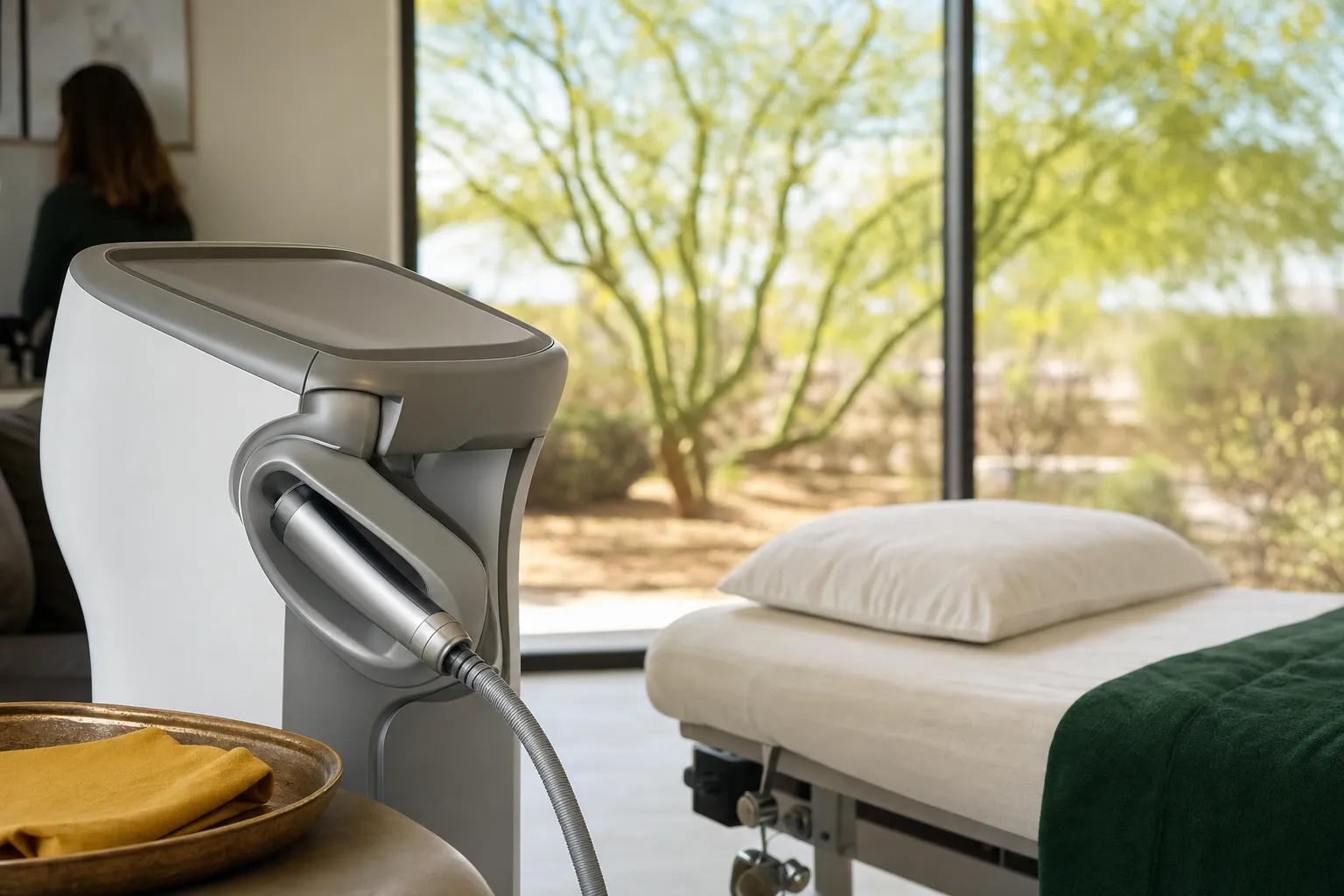
Short answer: For most soft tissue problems we plan a course of about three to six shockwave therapy sessions, usually once a week, and total cost depends on how many sessions you need, the treatment area and whether we combine shockwave with hands on chiropractic and rehabilitation. We review your condition, explain options and give a clear timeline and price before you start.
What is shockwave therapy and how we use it
Shockwave therapy is a non invasive treatment that delivers mechanical pulses to injured tissue to stimulate healing and reduce pain. Clinically it is used for conditions like plantar fasciitis, Achilles tendinopathy, tennis elbow and calcific shoulder. We offer Shockwave Therapy as one of several tools we use alongside adjustments, therapeutic exercise and massage. Learn more about our approach on our Shockwave Therapy service page.
We tailor treatment to the person. At The $35 Chiropractor Dr. Quentin Smith and our team combine a clinical exam with your history to decide whether shockwave is likely to help, how many sessions are reasonable and what supportive care to add.
Why timing and cost matter for Gilbert and Queen Creek patients
Timing matters because the biology of healing changes with how long an injury has been present. Acute problems often respond faster. Chronic conditions may need more sessions and time for tissue remodeling. Cost matters because shockwave is commonly billed per session and total expense scales with the plan you and we choose.
Locally, people in Gilbert and Queen Creek often want solutions that fit busy schedules and budgets. We serve residents of Queen Creek, San Tan Valley and nearby neighborhoods, and we discuss practical timelines that work around work, practice or sport commitments.
How long a typical shockwave therapy course takes
Below is the usual sequence we follow. We set expectations early and adjust the plan if you respond faster or slower than average.
- Initial evaluation. We review your symptoms, medical history and imaging if available, and assess movement and tender points. That visit determines if shockwave is appropriate and whether to pair it with chiropractic adjustments or rehab.
- First treatment. The first session includes explanation, a test dose to determine comfort and an initial treatment of the target area. People often feel soreness for 24 to 72 hours after a session.
- Follow up sessions. Most patients receive additional sessions at one week intervals. A common plan is three sessions spaced one week apart. For persistent or chronic issues we may recommend up to six sessions and reassess after the third visit.
- Reassessment and maintenance. We evaluate progress two to four weeks after the initial course. Some people need a maintenance session or a second short course, especially if symptoms recur with activity.
Key concepts that affect timeline and cost
- Condition chronicity. Acute injuries often need fewer sessions than long standing conditions.
- Severity and size of the tissue involved. Larger or more damaged areas usually require more treatment time.
- Treatment type and device. Focused and radial devices behave differently and clinics price them differently.
- Combination care. Adding chiropractic adjustments, massage or guided exercise can shorten overall recovery but may change billing and scheduling.
- Provider experience. An experienced clinician reduces side effects and tailors energy levels for comfort and effectiveness.
- Insurance and billing. Coverage varies widely. Many insurers consider shockwave elective for certain indications and may not cover it.
Patient profiles and a simple comparison of typical timelines
| Patient profile | Common timeline | What affects cost |
|---|---|---|
| Recent overuse injury under six weeks | 2 to 4 weekly sessions, improvement within 2 to 6 weeks | Smaller number of sessions, less need for adjunctive therapy |
| Chronic tendinopathy over three months | 4 to 6 sessions, gradual improvement over 6 to 12 weeks | More sessions, possible combination with rehab visits |
| Calcific shoulder or hard deposits | Often 3 to 6 sessions plus follow up rehab | Device choice and imaging guided care may increase cost |
How we decide whether shockwave is right for you
We never start shockwave without a focused exam. Our decision checklist includes
Evaluation checklist
- Confirmed diagnosis that is known to respond to shockwave
- Reasonable expectation that mechanical stimulation will aid healing
- No contraindications such as certain blood disorders or pregnancy
- Willingness to follow a brief home program of activity modification and exercises
Pro tip: Bring any prior imaging or notes from other providers to your evaluation. That helps us create an accurate plan and prevents unnecessary repeat tests.
What affects the out of pocket cost
We do not list a set price here because shockwave cost depends on your diagnosis, how many treatments you need and whether we pair the therapy with other services. Typical cost drivers are
- Number of sessions in the course
- Type of shockwave device used
- Additional services in the same visit such as adjustment or massage
- Whether insurance covers part of the treatment
At The $35 Chiropractor we prioritize clear pricing. We will review any expected charges with you before treatment so you can make an informed choice.
What good results look like and how we measure progress
We measure success by reduced pain, improved function and return to normal activities. We use simple tools like pain scales and movement tests to track change. Improvements often appear within a few weeks after the first session, but full tissue recovery can take months depending on the injury.
Pros
- Non invasive option for certain tendon and soft tissue problems
- Usually quick in clinic, with short sessions
- Often pairs well with chiropractic care and rehab
Cons
- May cause temporary soreness after treatment
- Insurance coverage varies and out of pocket cost can be significant if multiple sessions are needed
- Not appropriate for all conditions
Related services we offer
Shockwave is one part of an overall plan. Depending on your needs we may combine it with
- Chiropractic care for spinal and joint alignment
- Back pain treatment when core or spinal mechanics contribute to symptoms
- Massage for soft tissue preparation and recovery
- Acupuncture as an adjunct for pain modulation when appropriate
What to expect during and after a session
Sessions are usually brief. We position the applicator on the target, set energy levels and deliver a series of pulses. You may feel a tapping or pressure sensation. After treatment you can often resume light activity. We give simple home guidance to reduce soreness and promote recovery.
We are licensed and insured and follow local practice standards when recommending and delivering shockwave. For background on chiropractic practice standards see the American Chiropractic Association and the Arizona licensing rules at the Arizona Legislature site.
Common questions patients ask
Below are questions we hear often, with direct answers.
Frequently asked questions
Does shockwave therapy hurt
Many people describe a firm tapping or pressure during treatment. We tailor energy levels for comfort and use local adjustments if needed. Temporary soreness for a day or two is common.
How soon will I feel better
Some patients notice reduced pain within one to two weeks. For others improvement is gradual and continues over several weeks after the last session.
Is shockwave covered by insurance
Insurance coverage varies by plan and diagnosis. We provide documentation and billing codes to help you verify benefits with your insurer.
Are there any reasons I should not have shockwave
Certain medical conditions and pregnancy make shockwave inappropriate. We review contraindications at the initial evaluation and will suggest alternate options if needed.
Related locations and how we serve the area
We see patients from Gilbert and nearby neighborhoods. Our practice in Queen Creek serves people from communities including Higley Groves, Crescent Village and Stonebridge. For local details and directions see our Queen Creek location page at Queen Creek Arizona.
Helpful resources and references
Background on chiropractic practice is available from the Chiropractic entry on Wikipedia. For statewide regulatory context see the Arizona legislature resources on health professions. For professional standards and guidance the American Chiropractic Association publishes position papers and practice resources.
Key takeaway
Shockwave therapy often requires a short series of sessions, typically three to six spaced about a week apart. Timeline and out of pocket cost depend on the condition, treatment area, device and whether we combine therapy with chiropractic care. We evaluate each person and give a clear plan and price before starting.
Further reading on our site
For more on the conditions we treat and how shockwave fits into a full care plan see our topic page on Shockwave Conditions and our Back Pain Treatment overview. To learn about our general services in one place visit our Services hub.
Frequently asked questions
How many shockwave sessions will I need
Most people need between three and six sessions. We tailor the exact number to your diagnosis and response to treatment.
Will I need other treatments with shockwave
Often yes. We commonly combine shockwave with chiropractic adjustments, targeted exercises and soft tissue work to improve outcomes.
How do you decide the cost before I start
We estimate cost based on the recommended number of sessions and any additional services planned. We explain expected charges up front so you can make an informed choice.
Can shockwave therapy replace surgery
Shockwave can reduce pain and improve function for many tendon problems, but it does not replace surgery in all cases. We discuss all options, risks and likely outcomes during your evaluation.
Find our clinic and reviews
See our Google Business Profile to read patient reviews, check hours and get directions. You can also learn more about our services and locations on this site.