
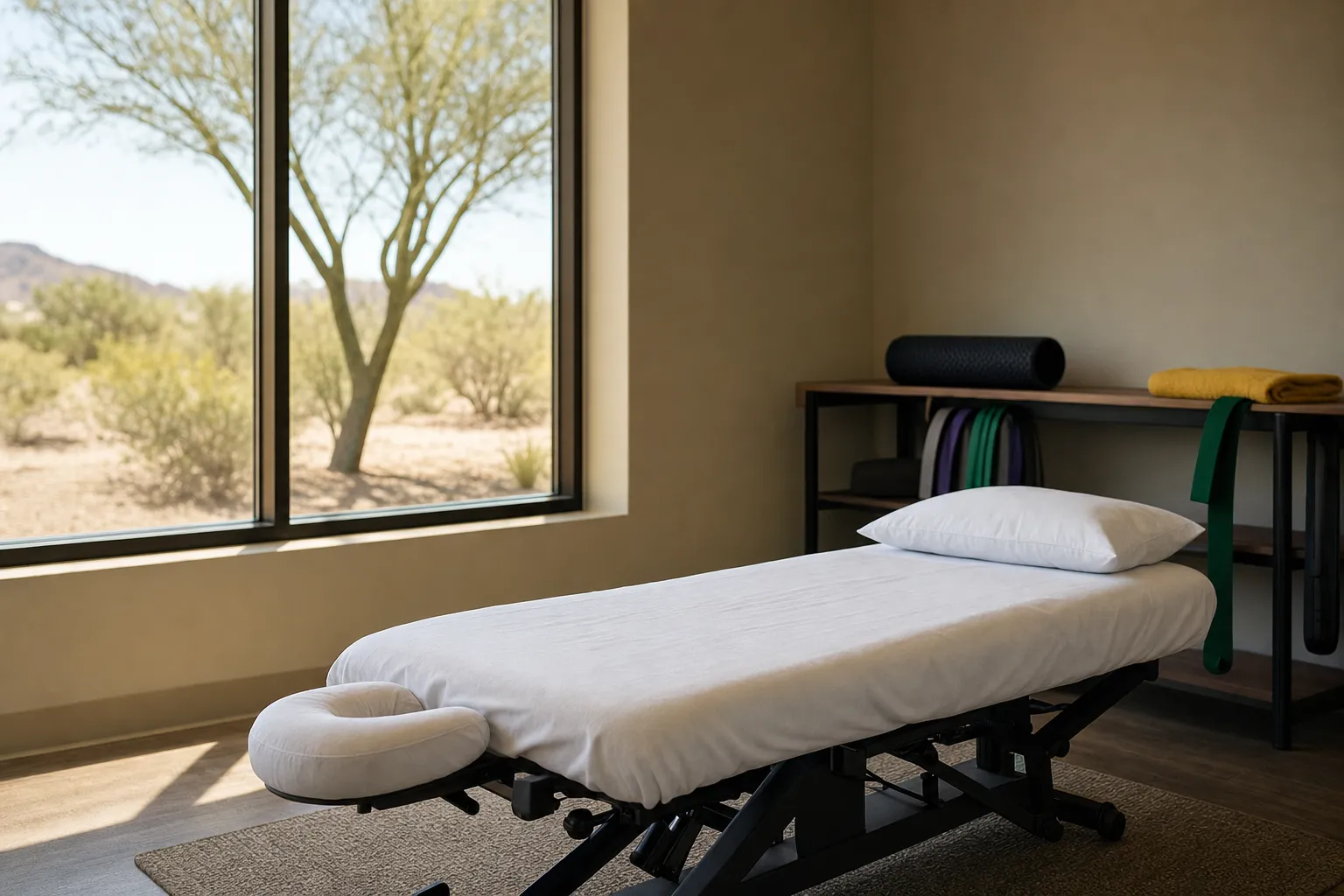
Short answer: sports rehabilitation is the clinical process that helps an athlete recover from injury, restore movement and return to activity safely. At The $35 Chiropractor we combine hands on adjustments, therapeutic modalities such as shockwave therapy, massage and targeted movement training to treat sports injuries for Higley area athletes.
What sports rehabilitation is
Sports rehabilitation is care focused on injuries and movement problems that affect athletic performance. It includes an initial evaluation, hands on treatment, therapeutic modalities, progressive exercise and a plan to return to sport. Providers on the team often include chiropractors, massage therapists and allied professionals who coordinate care with coaches or other clinicians when needed.
How we approach it. We start with a thorough history and movement assessment, identify what limits function, address pain and tissue restriction, and then add progressive strength and mobility work so the athlete can go back to their sport without re injury.
Why sports rehabilitation matters in Higley
Higley athletes face common local risks such as early season conditioning after hot summers, repetitive overhead sports like baseball and volleyball, and weekend soccer and football leagues. Poorly managed injuries can become chronic and limit play across a season.
Addressing injuries early helps shorten downtime, reduce the chance of compensatory problems and improve performance. That matters whether you play for a high school team, a club league or pick up games at a community field.
Key concepts every athlete should know
- Comprehensive assessment. A good evaluation looks for strength deficits, joint mobility limits, movement asymmetries and pain patterns.
- Load management. Progressing activity in a controlled way prevents setbacks and reduces reinjury risk.
- Return to play criteria. Objective measures guide when it is safe to resume sport, not just absence of pain.
- Multimodal care. Hands on adjustments, therapeutic modalities, massage and individualized exercise work together to speed recovery.
- Functional movement training. We emphasize movement patterns that match the athlete's sport, as described in our Kinetic Assessment and Functional Movement resources.
- Recovery strategies. Sleep, hydration and targeted modalities such as shockwave therapy can affect healing and readiness.
Common injuries we treat and what to expect
We commonly manage sprains, strains, low back pain from lifting or twisting, shoulder overload, hamstring strains and repetitive knee issues. Typical components of care include pain relief, mobility work, strengthening and sport specific conditioning.
Initial visit
We assess pain, range of motion and movement quality, then use hands on techniques and gentle progressions. If imaging or a specialist referral is needed, we help coordinate next steps.
Early recovery
The focus is reducing pain, restoring mobility and beginning safe loading. Modalities such as shockwave therapy or massage may be used when appropriate.
Progression and return
As symptoms improve, we add strength, power and sport specific drills. Objective tests guide a safe return to play so athletes do not resume full competition too soon.
How treatment options work together
Single therapies rarely solve complex injuries. Combining treatments shortens recovery and improves outcomes.
| Goal | Typical techniques we use |
|---|---|
| Reduce pain and inflammation | Hands on adjustments, soft tissue work, acupuncture when appropriate |
| Restore mobility | Manual therapy, targeted stretching, mobility drills |
| Regain strength and power | Progressive resistance, sport specific movement training |
| Address persistent tendon issues | Shockwave therapy combined with rehabilitation exercises |
When to see a clinician versus manage at home
Minor aches after play that improve with rest and self care often resolve. Seek professional care when pain limits function, strength is noticeably weaker, symptoms persist beyond a week, or you have recurring injuries. Early assessment reduces the chance of chronic problems.
Pro tip: If you miss playing time because you cannot perform sport specific movements at full speed and confidence, that is a sign to get an objective evaluation rather than continue to rest without progress.
Related services that support sports rehabilitation
We use several services that work together during recovery. Pain relief therapy is often central to early progress and helps us move to active rehabilitation sooner. Massage supports soft tissue recovery and reduces trigger points that limit motion. Shockwave therapy is an option for persistent tendon or insertional problems. For more on the underlying methods, see our page on Pain Relief Therapy.
For movement focused coverage, readers may also find our topic on Sports Rehabilitation useful.
Related locations and where we serve
We are based in Queen Creek and see patients from Higley, San Tan Valley and surrounding communities. If you are in Higley, our location page outlines local details and services we commonly use for athletes in that neighborhood. Visit our Higley location page for more local information: Higley, Arizona.
Helpful resources and further reading
For a clinical definition of rehabilitation concepts, see the Wikipedia entry on sports rehabilitation. For questions about injury patterns in youth and community sports, national health organizations provide overviews of prevention and common injuries.
What to bring to your first sports rehabilitation visit
- Details about the injury or symptoms and when they started
- Previous imaging or reports if available
- Typical training schedule and sport specific demands
- Any recent treatments you tried
Key takeaway
Sports rehabilitation is a staged process that moves from pain relief to targeted strength and sport specific return. Prompt assessment and a multimodal approach reduce downtime and the risk of reinjury for Higley athletes.
Frequently asked questions
How soon after an injury should I get assessed?
If pain or weakness limits normal activity for more than a few days, or if you cannot perform sport specific movements safely, arrange an assessment so the problem can be addressed before it worsens.
Can chiropractic adjustments help with sports injuries?
Yes, hands on adjustments can restore joint motion, reduce pain and improve movement quality. Adjustments are one part of a broader rehabilitation plan that also includes soft tissue work and exercise.
What is the role of shockwave therapy in rehab?
Shockwave therapy is most useful for persistent tendon issues and some chronic insertional problems. It complements exercise based rehabilitation rather than replacing it.
Will I need imaging like an X ray or MRI?
Not always. We base the need for imaging on the history and examination. If imaging is needed to rule out a fracture or structural issue, we will discuss it and coordinate the referral.
How long does a typical return to play take?
Timelines vary by injury severity, sport demands and individual factors. Minor strains may resolve in a couple of weeks while more complex injuries take months. We focus on objective readiness rather than a fixed timetable.
Learn more and check local information
To see patient experiences and local details, check our Google Business Profile and read recent reviews and directions there. For more on how we handle sports related injuries, see our topic page on Sports Rehabilitation and our service page for Pain Relief Therapy.
Visit our Higley location page to learn about nearby services and common local sports considerations.